Hello AlphaBay newsletter subscribers! In 2011, when I wrote the first-ever print magazine story about Bitcoin for Forbes, I wasn't interested in Bitcoin's potential as an investment. (Regrettably, given that one bitcoin was worth $1 at the time!) Instead, I saw this new phenomenon of cryptocurrency as many of its users did: potentially anonymous, untraceable digital cash that would create a new internet underground for both financial privacy and crime. After all, even Bitcoin's creator, Satoshi Nakamoto, had written in one of the first emails introducing his invention that "participants can be anonymous." Surely, I thought, Bitcoin would open up vast new worlds of money laundering and online markets for contraband of all kinds. And it did. |
But today, 11 years later, Bitcoin has turned out to be—surprise!—the opposite of anonymous or untraceable. In fact, an entire industry of software companies have built powerful tools that allow clients to follow the money on cryptocurrency blockchains far more effectively than I could have imagined when I wrote that first piece about Satoshi's "untraceable" digital cash. This was an unpleasant surprise, too, for the many thousands of users of dark-web markets like Silk Road and, later, AlphaBay, who had also believed that Bitcoin's privacy properties would protect them. |
Over the past decade, I learned how wrong I had been about Bitcoin only gradually: how, even though Bitcoin's blockchain only records Bitcoin addresses rather than identifying information, it's far too easy to connect someone's addresses with their identity and trace their transactions. But it was in 2020 that I began to see the name of one company mentioned in Department of Justice press releases, thanking them for their role in one major cybercriminal bust after another: Chainalysis. |
In the fall of that strange year I met Chainalysis cofounder Jonathan Levin for lunch under a pandemic sidewalk shed on a rainy day in Manhattan's Koreatown, and he walked me through every major case his company had been involved in since its inception. (Chainalysis' story is now a major thread of my book about the advent of cryptocurrency tracing and the yearslong spree of cybercriminal busts it enabled, Tracers in the Dark: The Global Hunt for the Crime Lords of Cryptocurrency, from which this AlphaBay series is excerpted.) But as I talked to Levin, I was surprised, most of all, to learn that cryptocurrency tracing had played a pivotal part in a story I'd already been trying to tell for years: the hunt for and takedown of Alpha02, the mysterious kingpin of AlphaBay—that this, even more than the leaked email address in an AlphaBay welcome email I had heard about before, was the evidence that had truly confirmed that Alpha02 was Alexandre Cazes, an eccentric young, Lamborghini-driving French Canadian man living in Bangkok. |
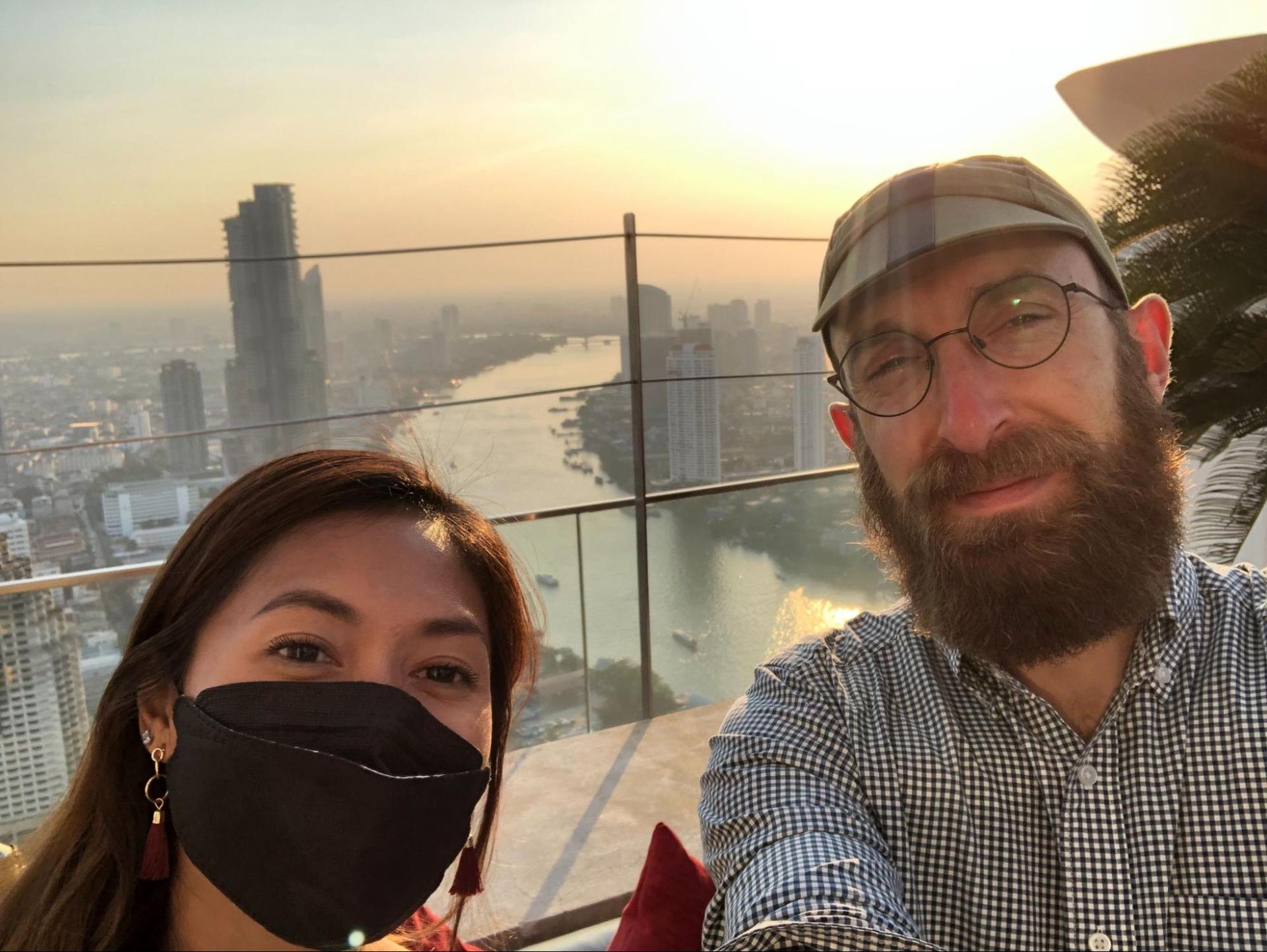
In Part 2 of our series on the AlphaBay investigation, I reveal for the first time the story of how cryptocurrency tracing cracked this case. But beyond all that crypto-tracing, to tell this chapter of the story and capture Cazes' dark web largesse, I also re-traced a few of his footsteps in Bangkok. Here's me and my Thai translator Vijitra Duangee at Cazes' favorite rooftop restaurant, where we had a drink one evening. (Certainly all I could afford there.) Maybe this view helps explain Cazes' $40,000 bill. |
The view from the Sirocco restaurant, Alexandre Cazes' favorite in Bangkok. |
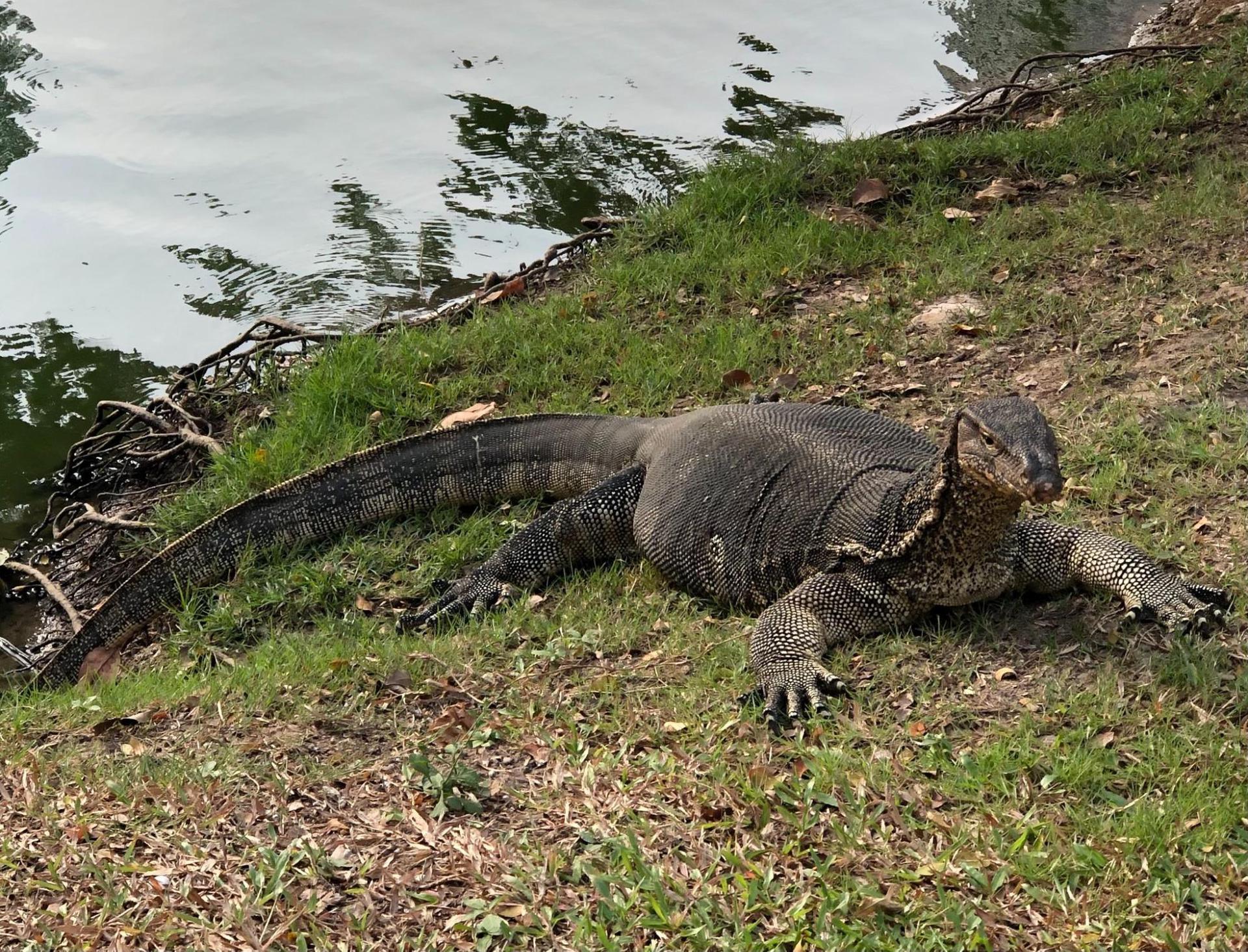
In this installment of the story I also introduce readers, briefly, to Bangkok's monitor lizards, which, during my time reporting this story in the Thai capital, I became a bit obsessed with. The one in the photo I took below must have been 10 feet from tongue to tail. If you go for a run around the ponds in Lumphini Park, be careful not to step on them. |
Monitor lizards, like this giant one I photographed during a reporting trip to Bangkok, can smell prey from miles away—not unlike a cryptocurrency tracing FBI analyst. |
Read Part 2 of our series on AlphaBay at the link below, and check out my book Tracers in the Dark, of which it's a part, here. |
|
|















 Posts
Posts
No comments:
Post a Comment
🤔